
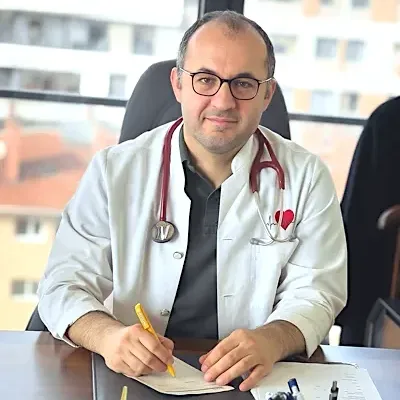
This council is an evaluation process that addresses the issues you experience regarding heart rhythm by integrating them with the physical structure of your heart. Although heart rhythm disorders sometimes appear to be just an electrical malfunction, they often stem from structural changes or tissue damage in the chambers of the heart. While the electrophysiology specialist examines the heart's electrical conduction system, the imaging specialist analyzes the heart's muscle and valve structure in detail. Why do these two perspectives work together? Because to find the source of a rhythm disorder, it is necessary to look not only at the heart's signals but also at the foundation through which those signals pass. For example, an enlargement in the heart or a valve leak can trigger a rhythm disorder. During this process, all your current heart charts, rhythm recordings, and echocardiography images are brought together on a single table. Thus, the treatment decisions applied do not focus solely on correcting the rhythm but also aim to preserve the overall anatomical condition of your heart.
- To understand whether there is an underlying hidden problem related to the heart's own structure causing the frequent palpitations you experience, your results are examined together with your imaging results.
- In cases of rhythm irregularities that do not respond to medication, procedure options are determined more safely by considering the physical condition of the heart.
- In cases such as Atrial Fibrillation (irregular heart rhythm), risk factors such as blood clot formation or enlargement within the heart are identified through imaging to formulate a treatment plan.
- It is revealed in detail whether sudden increases or irregularities in your heart rate are caused by your vascular structure or an electrical pathway difference.
- In serious cases such as Ventricular Tachycardia (very fast heart rate originating from the ventricles), changes in the heart's muscle tissue are examined to create a clearer roadmap.
- The possible effects of congenital pathways, such as WPW Syndrome (having an extra electrical pathway in the heart), on the overall structure of the heart are comprehensively evaluated.
- For individuals who have previously had a heart attack and are experiencing rhythm problems, a solution is generated by establishing a link between the location of the damaged tissue and the disrupted rhythm.
If your rhythm disorder has been clearly explained by other experts previously and it has been confirmed that no structural problem accompanies it, it may be sufficient to remain under the direct follow-up of a cardiologist.